Palladium nanoparticle synthesis and an estimation of these effects in vivo on the peritoneal cells from the male mouse C57BL/6
Keywords:
palladium nanoparticles, toxicity, lymphocytes, macrophages, ascorbic acid, mice, nanomedicineAbstract
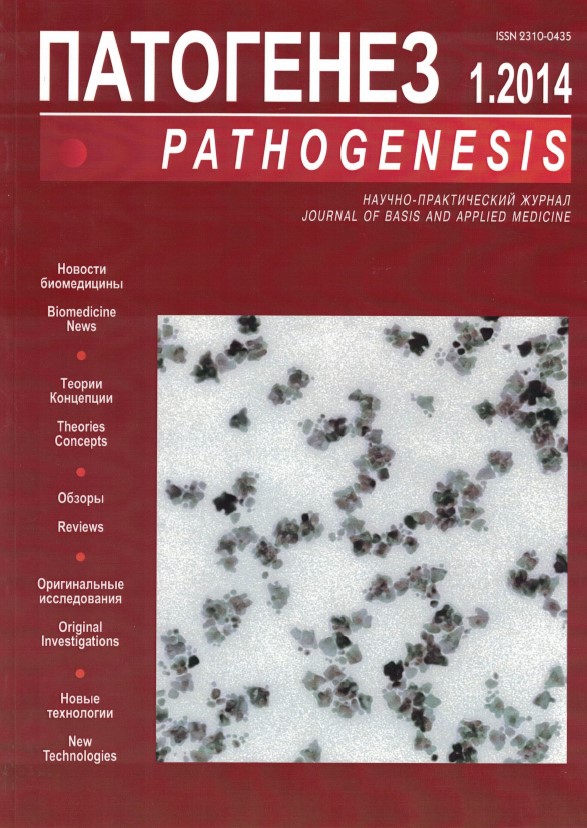
The palladium nanoparticles (Pd-NPs) have been prepared using the ascorbic acid as the reducing agent and the hydroxyethylcellulose as a stabilizing agent. The Pd-NPs forms and sizes were evaluated using a transmission electron microscopy. In vivo biological effects of these Pd-NPs were estimated using the male mouse C57Bl/6. The Pd-NPs [10–500 mkM] have been injected intraperitoneally for 3 hours followed b y a quantitative analysis of the peritoneal cells using the flow cytometer. The dose-dependent effects of these Pd-NPs have been registered. The Pd-NPs in the concentration <10 mkM possess the immune modulatory effects and were not toxic that allows us to use these Pd-NPs in the future work with the biological systems.
Downloads
Published
2023-03-20
Issue
Section
Original investigations
How to Cite
Palladium nanoparticle synthesis and an estimation of these effects in vivo on the peritoneal cells from the male mouse C57BL/6. (2023). Patogenez (Pathogenesis), 12(1), 46-50. https://test.pathogenesis.pro/index.php/pathogenesis/article/view/638